Security Validation Timelines Shape Exclusive Tournament Access in Portable Gaming Apps
Written by Quinn Koch · Aug 26, 2026
Security Validation Timelines Shape Exclusive Tournament Access in Portable Gaming Apps
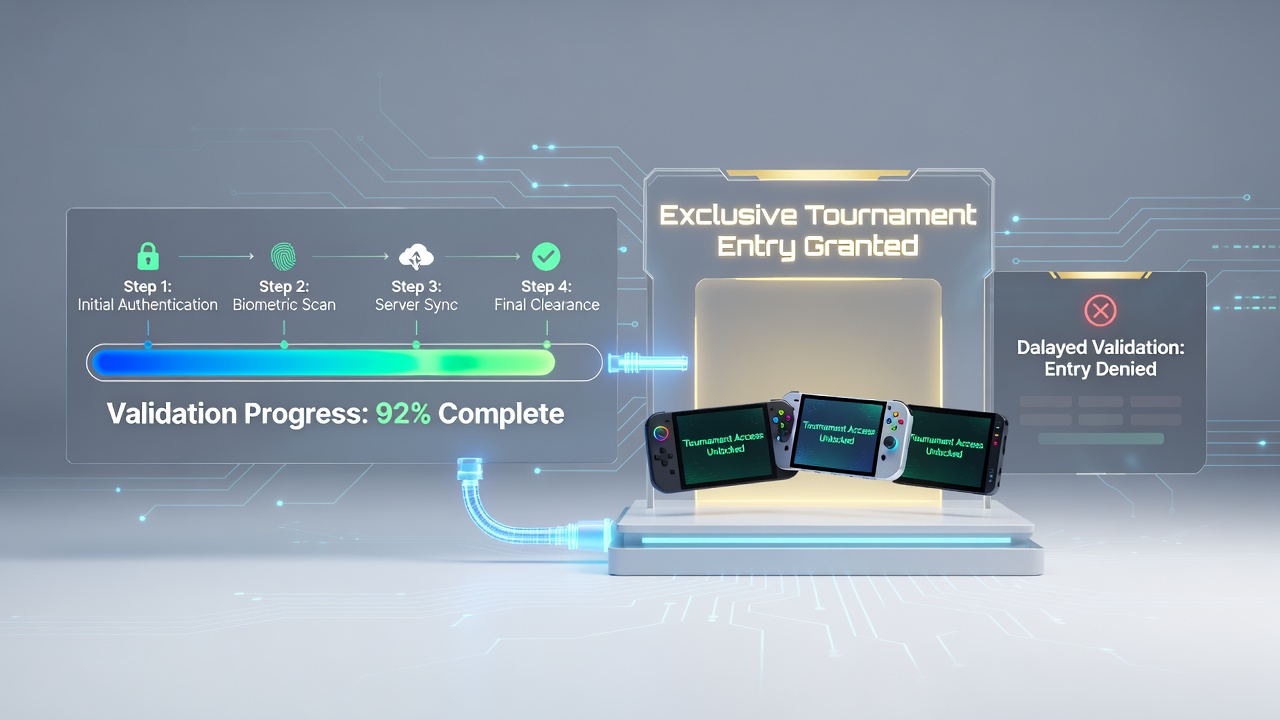
Security validation timelines determine how quickly players gain entry into exclusive tournaments hosted inside portable gaming applications, and those timelines often hinge on layered authentication protocols that verify identity, device integrity, and transaction history before granting access. Developers integrate multi-factor checks that scan for malware signatures while confirming account details against centralized databases, and the entire sequence typically unfolds within seconds when systems operate at peak efficiency yet stretches into minutes during high-traffic periods or when additional manual reviews become necessary. Regulatory frameworks in multiple jurisdictions require these checks to protect both operators and participants, which means validation steps cannot be skipped even when tournaments promise immediate entry for high-tier members.
Core Components of Validation Sequences
Portable gaming apps rely on a sequence of automated and human-assisted verifications that begin the moment a user attempts to register for a restricted bracket. First the system confirms device authenticity through certificate pinning and behavioral analytics, then it cross-references user-provided documents against government-issued records where local rules mandate such steps. Observers note that delays frequently arise when biometric data mismatches occur or when network latency interrupts the handshake between the app and backend servers. Those who've studied these flows point out that each added layer, while increasing security, directly extends the window before a player receives the tournament confirmation notice.
Regional Regulatory Influences on Processing Speed
Requirements differ across markets, which creates varied timelines for the same app depending on where the user connects. Data from the American Gaming Association indicates that U.S.-based operators often complete initial device checks in under four seconds during normal loads, yet must pause for manual document review when state-specific rules flag new accounts. In contrast, Canadian frameworks administered through the Alcohol and Gaming Commission of Ontario impose additional residency confirmations that can extend validation by thirty to ninety seconds even for returning players. August 2026 brought renewed scrutiny from several North American regulators after a spike in account takeover attempts, prompting some platforms to insert extra fraud-scoring pauses that further lengthen the path to tournament brackets.
How Delays Translate Into Missed Opportunities
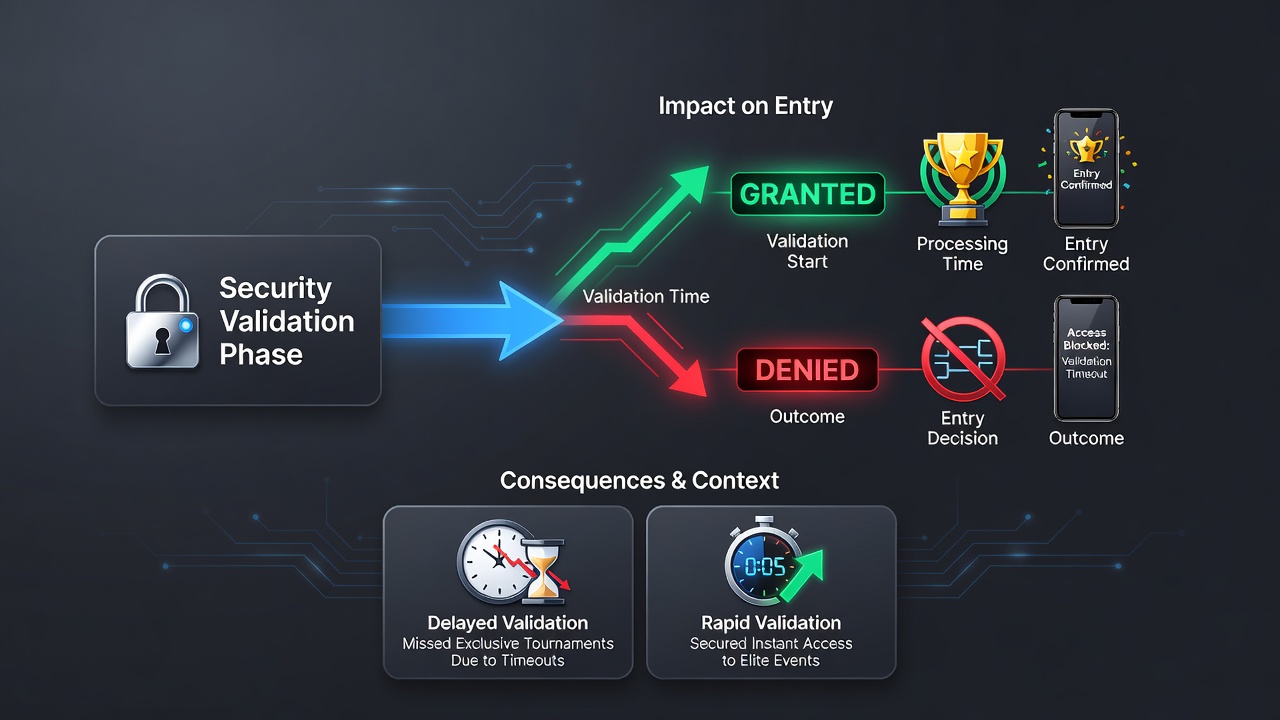
Exclusive tournaments in portable apps frequently open registration for only narrow windows, sometimes as brief as fifteen minutes, so any validation lag can push a player past the cutoff. One documented case involved a European operator whose automated system routed certain high-value accounts to secondary review queues during a peak event in late July, resulting in hundreds of qualified users receiving entry denials despite having completed deposits hours earlier. Researchers tracking similar incidents report that players who encounter repeated delays often shift activity to competing apps with faster internal pipelines, particularly when loyalty programs tie tournament access directly to verified status levels. The reality is that these timing pressures intensify during seasonal promotions when thousands attempt simultaneous registration.
Technical Factors That Extend or Compress Timelines
Network conditions, server load, and the complexity of chosen authentication methods all influence how long validation takes. Apps that default to facial recognition plus device-bound cryptographic keys usually finish faster than those requiring live video calls with support staff, although the latter method remains mandatory under certain licensing conditions for large prize pools. Studies conducted by academic teams at institutions focused on cybersecurity have measured average processing times across dozens of mobile platforms, revealing that cloud-based verification services reduce median delays by up to forty percent compared with on-premise solutions. Yet those same studies also record outlier cases where validation stretched beyond five minutes when multiple risk signals triggered sequential human reviews.
Industry Adaptations Emerging in 2026
Operators have responded by deploying predictive scoring engines that pre-validate frequent players during off-peak hours, storing encrypted tokens that allow near-instant tournament entry when the actual registration window opens. Several major platforms announced in August 2026 that they would expand these pre-clearance programs to include more mid-tier accounts, aiming to reduce friction without compromising compliance. Industry organizations tracking adoption rates note that apps incorporating such pre-validation saw measurable increases in completed tournament entries compared with competitors still relying solely on real-time checks. The ball remains in the court of smaller developers who lack resources to maintain parallel validation infrastructure, and those operators continue to face higher abandonment rates during time-sensitive events.
Conclusion
Security validation timelines sit at the intersection of regulatory compliance, technical capability, and player expectations inside portable gaming apps, and their length directly governs who reaches exclusive tournament brackets. As platforms refine pre-clearance techniques and regulators refine oversight standards, the interval between intent and access continues to shrink for many users while remaining a decisive barrier for others. Data from multiple jurisdictions shows that incremental improvements in processing speed correlate with higher participation numbers, underscoring the operational importance of efficient yet secure validation flows.